
Easy Small Batch Lemon Curd
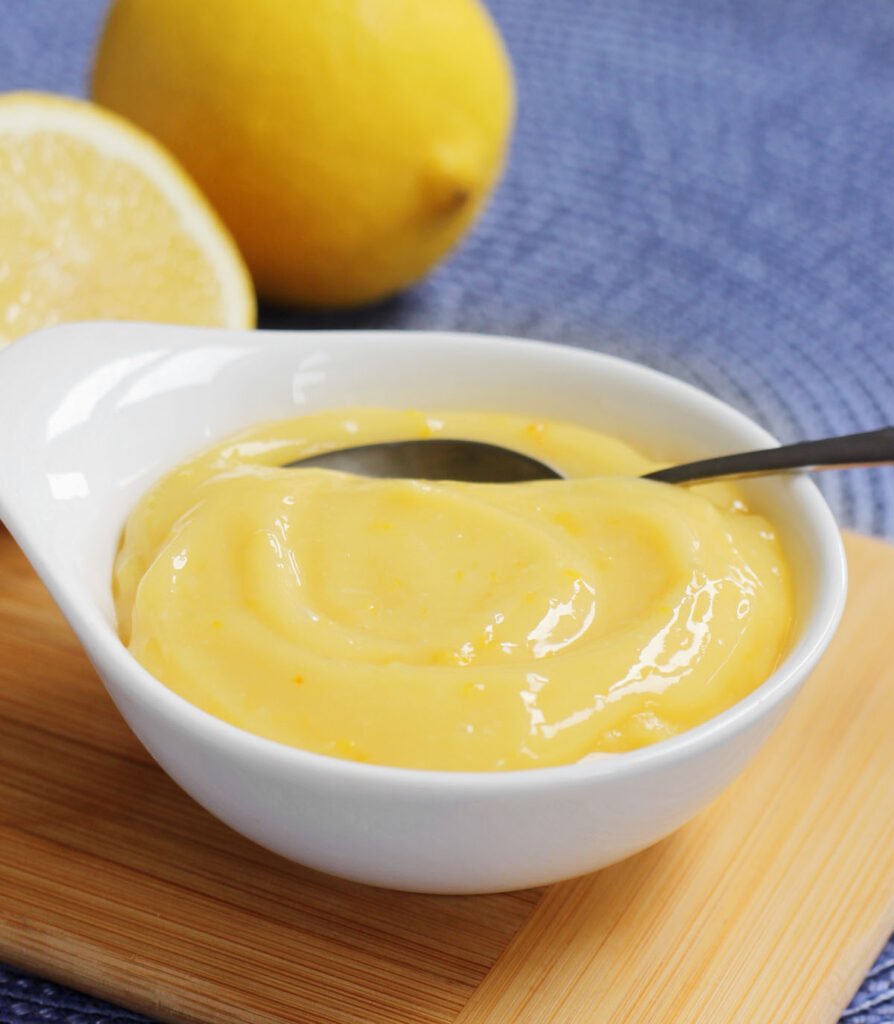
This is my easy recipe for Small Batch Lemon Curd which is so versatile and quick to make with few ingredients. It's super silky and simple to make in one pot with fresh lemon juice and zest. This recipe is a scaled down version of the Zesty Lemon Curd in my debut cookbook "Scientifically Sweet: A Scientific & Delicious Approach to Artisanal Baking". If you want a full batch recipe, check out my Easy One Pot Lemon Curd. If you like baking on a small scale, check out my other Small Batch recipes.

INGREDIENTS FOR SMALL BATCH LEMON CURD
- Butter - the key to a delicious silky lemon curd is a bit of butter at the end to make it smooth and glossy. It also helps it set up with a nice thick texture.
- Lemon Juice - I only ever make lemon curd with freshly squeezed lemon juice (not bottled). It provides the tangy flavor and the acidity also helps to set the egg proteins.
- Lemon zest - most of the lemon flavor really comes from the yellow zest on the outside of the lemon. That is where the flavorful oils live.
- Salt - salt is important in any recipe, and it helps balance the sweetness as well as enhance the lemon taste.
- Egg - Egg provide majority of the structure for the curd and is absolutely important. Egg proteins set into a protein network to create a soft gel-like texture.
- Sugar - a bit of sugar sweetens the curd to balance the acidity and also plays a major role in creating a silky texture that prevents the egg proteins from coagulating too firmly.

STEP BY STEP INSTRUCTIONS
This recipe is the easiest you will come by because you literally place everything in a bowl and stir over simmering water until it is thick!
- STEP 1). Coat sugar with lemon oils. Place sugar in a saucepan with lemon zest and rub it together with your fingers or the back of a spoon until fragrant and the sugar takes on a hint of yellow.
- STEP 2). Add egg. Whisk in egg until smooth.
- STEP 3). Add lemon juice. Whisk in lemon juice until mixture is smooth.
- STEP 4). Add butter and stir over medium-low heat until mixture is thickened enough to coat the back of a spoon.
- STEP 5). Sieve. To get an extra smooth curd, pass it through a sieve into a clean bowl. Note that this will remove the lemon zest, so if you want to keep it, you may opt not to sieve. Place a piece of plastic wrap directly over the surface and refrigerate until set.
EXPERT TIPS FOR SMALL BATCH LEMON CURD
- Rub the sugar together with the lemon zest. Why? The yellow part of lemon skin contains essential oils (the same ones used to make citrus fragrances in perfumes and lemon-scented soaps) and when you rub sugar against them, it releases these oils. The oils coat the flat surfaces of the sugar crystals and make the curd taste extra lemony - a technique that's know as "plating" in the food industry. Sugar also acts as an abrasive to help break down the zest so that there aren't large stringy pieces of it that would distract from the silky smooth texture of this curd.
- Cook over gentle heat. Overcooking will cause proteins to bond too tightly, squeezing water out from between them and giving them a rubbery, lumpy texture. For insurance, indirect heat via steam is used to moderate the cooking temperature since boiling water cannot exceed 100°C. This recipe uses whole eggs to add firmness for a thick, spoonable texture, while the extra yolk adds creaminess and tenderness.
- Strain the curd. Pass the hot curd through a sieve for the smoothest texture.
- Place a piece of plastic wrap directly over the surface before chilling to prevent a skin from forming.

RECIPE FAQ
Lemon curd is a type of stirred custard made from a cooked, thickened egg mixture. In the presence of heat and acid, egg proteins begin to bond to one another, transforming the liquid mixture into a smooth thick gel. In order to do this, gentle cooking is necessary to minimize the possibility of curdling.
The acid from lemon juice helps to transform the ultimate structure of proteins (a process called denaturation) which unravels their natural folded structure so that their side chains are exposed to react with the surrounding environment. When this happens, the proteins begin to form bonds with each other, or coagulate, in a gentle way to form a continuous network of proteins with water held between them. This is what creates the thick and silky texture of citrus curd.
If you over-heat the lemon curd, the egg proteins can coagulate and you will see little bits of cooked egg. You can try to strain the curd to remove the bits of egg, but it will affect the overall consistency. I would recommend trying again!
Lemon curd is made from eggs, sugar, lemon juice and butter. It's the same concept as a custard, except for lemon curd the proteins set by acid as well, which is why lemon curd does not require a thickener like flour or corn starch.
You can use lemon curd in so many ways! Use it as a filling for cakes and cupcakes, to serve with pancakes or crepes (to make a crepe cake!), you can add it to your yogurt with some berries and granola, swirl it through vanilla ice cream or fill tarts and pastries.

ALTERNATE RECIPE
For an extra rich and extra yellow curd, add 1 extra egg yolk to this recipe and increase the sugar to ¼ cup (50g). It will provide a firmer set and thicker consistency with richer mouthfeel. I like to use this thicker version for spreading over bars or topping cheesecake, and the looser one is great to serve with yogurt or as a filling for cakes and cupcakes, although they are interchangeable. So, you decide! In the video, I make a double batch. To make the small batch, you follow the same steps using the recipe below. If you also want to make a double batch, simply double each of the ingredients and follow the same method.
STORAGE
Store lemon curd covered tightly in the fridge. I like to store it in a mason jar.
Lemon curd will last up to 2 weeks in the fridge, so it is great to make it in advance when you need it to fill cakes and pastries.

If you love small batch baking, check out these recipes!
The BEST Small Batch Chocolate Fudge Brownies Small Batch Chewy Chocolate Chip Cookies Small Batch Chewy Double Chocolate Chip Cookies Easy Small Batch Lemon Curd The BEST Flourless Small Batch Brownie Cookies (Gluten-Free) Small Batch Tahini Swirl Chocolate Fudge Sheet Cake Marble Red Velvet Cake with Cream Cheese Frosting Small Batch Double Chocolate Banana MuffinsVideo
Small Batch Lemon Curd


Ingredients
Whole egg lemon curd:
- 3 tablespoon (42g) granulated sugar
- zest of one lemon
- 1 large egg
- 3 tablespoon (45ml) freshly squeezed lemon juice
- 2 tablespoon (28g) salted butter, cut into small pieces
Extra rich lemon curd:
- ¼ cup (50g) granulated sugar
- zest of one lemon
- 1 large egg
- 1 large egg yolk
- 3 tablespoon (45ml) freshly squeezed lemon juice
- 2 tablespoon (28g) salted butter, cut into small pieces
Instructions
You can make this curd using two different methods: you can cook it indirectly in a double boiler or over direct heat in a sauce pan. The indirect method almost guarantees that you will not over-cook it, while the direct method requires careful attention and it's best to sieve the finished curd in this case.
- Combine sugar and lemon zest in a heatproof bowl for the indirect method or in a small saucepan for the direct method. Use the back of a spoon or your fingertips to rub the zest into the sugar. This will coat the sugar crystals with fragrant oils from the lemon peel, adding a whole new dimension of intense lemon flavor to this curd.
- Add the whole egg and extra egg yolk (if you're making the rich & thick version) to the lemon sugar and whisk until smooth. Whisk in lemon juice. Add the pieces of butter and set the bowl over a pot with ½-inch of simmering (or use a double boiler). Whisk gently over the for 7-10 minutes until thick enough to coat the back of a spoon (using a spatula prevents the incorporation of many tiny air bubbles that whisking would otherwise cause). If it still hasn't thickened after 10 minutes, increase the heat.
- If you're cooking over direct heat, then place the saucepan over low heat and whisk gently but constantly until the mixture thickens. Do NOT walk away or stop stirring. If the mixture heats too fast, then it can curdle.
- Immediately pour the hot curd through a sieve and into a small jar or glass storage container, place a piece of plastic wrap directly in contact with the surface and refrigerate until thoroughly chilled. Once chilled, cover it tightly and keep refrigerated. This curd will last for about a week in the refrigerator.
Sublime! It was so easy and tastes delicious! I will double or triple this next time to keep some on hand. Thank you for this recipe- it took my cupcakes to the next level 😋
Thank you Julie!
i was taught to add (room temp) butter, at the end, after you take it off the stove.
I know / believe this method works, but i believe it is better to add the butter at the end
Hi Stephen! Yes, I use to make it that way as well. However this is a one pot method is quicker and easier, not requiring a double boiler. If you add the fat at the end you need to use a double boiler to ensure you do not curdle the egg.
I made this for my wife for our anniversary and she loved it. I choose the recipe because the "stars" are the lemon juice and zest, as opposed to the sugar and fat in other recipes. So simple and so delicious. I used a double boiler and it thickened perfectly. Such a decadent dessert that can be made with such simple ingredients. Thanks!
You are welcome Dr. Jon! I'm so glad you and your wife enjoyed the recipe.
How much does this recipe make for lemon curd. I have 6 for a luncheon and will use as a base to sit home made meringues on. Will this be enough? Sarah-Jane Batten
Hi Sarah-Jane! It makes about 1 cup, so it depends on how much you want as a base.
This lemon curd turned out amazing! It was my first time making it but it couldn't have been easier and tastes incredible. I made the extra rich version directly on the stovetop and it came together in just a couple of minutes. Thanks for a great recipe!
You are welcome Gayatri! Glad you enjoyed the recipe 🙂
Can this lemon curd be frozen in "drops" to use as a filling for cookies?
Hi there, what a neat idea. I'd say you can try stirring in some flour to help stabilize it before freezing. Let me know how it goes!
Spectacular success! Thank you from the bottom of my heart; I've tried others and failed and they are so fussy to make too. Your recipe is not only super east and quick but it tastes perfect. I used Lakanto white instead of sugar to make it low carb and it worked perfectly.
Thank you Rose! Glad the recipe was a success! 🙂
Used this as a Filling in a Lemon Cake. Yummy ,thanks!
You are welcome Jack! Glad you liked the curd 🙂
Tripled the recipe - it's that good!!!
Thank you Elaine!
Love this recipe it’s velvety smooth and very indulgent I used this in my lemon cakes stirred into the final cake batter before baking
Thank you so much Sapphire! Glad you like the recipe!